
"rainy season coffee"
800 article(s) found

Boutique Coffee General knowledge of Coffee concept of monsoon coffee
Monsoon coffee (rainy season Malaba) is a unique coffee from southern India using a typical air-drying process, specially stored in an open warehouse and exposed to the monsoon to increase viscosity and reduce acidity. Monsoon coffee is stored in a special warehouse until the monsoon arrives, and the ventilation structure is designed to allow the moist monsoon to circulate between the coffee beans.

Can I grow coffee in China? Technical record of Seedling, planting and Shade cultivation in Qianjie Coffee Plantation
Professional coffee knowledge exchange more information about coffee beans Please follow the coffee workshop (Wechat official account cafe_style) what are the fruits and seeds of coffee? What the coffee beans look like. Nursery preparation: attention should be paid to shading effect in nursery selection. Seedlings exposed to direct sunlight are easy to die and reduce the survival rate. Therefore, the nursery must have shading equipment, shading materials can

A brief introduction to the market price of bitter and fragrant Guatemalan boutique coffee beans
two。 Antigua Coffee (AntiguaCoffee): rich volcanic soil, low humidity, plenty of sunshine and cool nights are the climatic characteristics of Antigua coffee producing areas. The valley is surrounded by three volcanoes: Agua, Fuego and Acatenango. Tierra del Fuego volcano is one of the three most active volcanoes in Guatemala, often erupting.
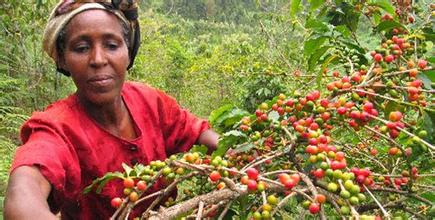
The difference between hand-picking method and shaking method of coffee beans different methods are adopted in different areas.
The harvest time and methods of coffee vary from place to place, generally speaking, about 1-2 times a year, sometimes up to three or four times. The harvest time is mostly in the dry season. In Brazil, for example, around June, it starts from Basiya in the north-east and ends in Parana in the south around October. The harvest period of Central American countries is from September to January next year, from lowland to high.

Boutique coffee learns the common sense of coffee what is monsoon coffee?
What is monsoon coffee? Monsoon coffee (rainy season Malaba) is a unique coffee from southern India using a typical air-drying process, specially stored in an open warehouse and exposed to the monsoon to increase viscosity and reduce acidity. Monsoon coffee is stored in a special warehouse until the monsoon arrives, and the ventilation structure is designed to allow the moist monsoon to circulate through the coffee.
![Yunnan Coffee Origin Plan] Why did Qianjie Coffee choose the most difficult road?](https://world.gafei.com/uploads/allimg/180624/3-1P624213J11I.jpg)
Yunnan Coffee Origin Plan] Why did Qianjie Coffee choose the most difficult road?
Professional coffee knowledge exchange more coffee bean information please follow the coffee workshop (Wechat official account cafe_style) to check the weather forecast on the mobile phone. Two days later, for more than a week, it was rainy in Yunnan, and the editor embarked on the road he had often visited in the past few years, planting the second batch of Arabica coffee. In the past few days in Yunnan, I came into contact with several acquaintance farmers, they

World Coffee Bean Tour Burma Coffee Bean
On July 13, 1813, the American Baptist Adoniram Judson and Ann Judson, Protestant missionaries known as the Apostles of Burma, came to Myanmar with Catholicism and coffee. As an indispensable drink in daily life, they began to try to grow coffee trees in Myanmar. In 1885, Burma became a British colony, and the colonists offered Burmese coffee to Queen Victoria.

What is monsoon coffee? Coffee fans must know the basis of coffee
What is monsoon coffee? Monsoon coffee (rainy season Malaba) is a unique coffee from southern India using a typical air-drying process, specially stored in an open warehouse and exposed to the monsoon to increase viscosity and reduce acidity. Monsoon coffee is stored in a special warehouse until the monsoon arrives, and the ventilation structure is designed to allow the moist monsoon to circulate through the coffee.

A brief introduction to the cultivation of high-quality Guatemalan coffee beans, geographical location, climate and altitude
Guatemala has seven major coffee producing areas: Antigua,Coban,Atitlan,Huehuetenango,Fraijanes,Oriente and San Marcos. Antigua is a famous producer of coffee. Antigua coffee is produced in Hacienda Carmona, where the best quality coffee is EL Pulcal, which is not only of good quality, but also better than

Grinding scale of Rwandan Coffee beans Variety treatment manor taste
Rwanda is located in the south of the equator in east-central Africa, a landlocked country. It is bordered by Tanzania to the east, Burundi to the south, Zaire to the west and northwest, and Uganda to the north, with a land area of 26338 square kilometers, ranking 149th among all countries in the world and close to Burundi, Macedonia, Haiti and Albania. Rwanda is located in east-central Africa, bordered by the Democratic Republic of the Congo to the west.

A brief introduction to the origin, development, history and culture of Guatemalan boutique coffee beans
The coffee beans in each producing area have their own characteristics, and they have won a lot of praise for Guatemala in the international community, especially the perfect coordination of the sour, sweet and mellow texture of Antigua; with a touch of smoke and a little more emphasis on its mystery, you will have a reason not to look for alternatives everywhere after tasting. Here, the slopes of the Sierra Madre volcano are of the highest quality.

A brief introduction to the market price of smooth and gentle Kilimanjaro boutique coffee beans
Mixed preparation: first: choose good quality coffee beans, because the use of poor quality coffee beans, of course, will greatly damage the flavor of coffee, even if you produce a very balanced single coffee, but also can not make delicious coffee, choose good quality coffee beans, is the biggest point. Second: get rid of defective beans, mixed with defective beans, the taste will become worse. So don't be stingy.

A brief introduction to the origin, development, history and culture of delicious and balanced Guatemalan boutique coffee beans
3. Traditional TraditionalAtitln is one of the five largest volcanic coffee producing areas in Guatemala, and its soil organic matter is the most abundant among the five major volcanic coffee producing areas. 90% of the traditional Atilan coffee is grown on the violent volcanic slopes of Lake Attila, where the daily breeze stirs the lake, which is an important factor affecting the microclimate of the region.

Rwanda Coffee Flavor description Grinding characteristics introduction of Fine Coffee beans in producing areas
The watershed between the Congo basin and the Nile basin runs through Rwanda from north to south, with about 80 per cent of the country draining from the Nile and about 20 per cent from the Ruzi River and Lake Tanganyika. The longest river in the country is the Niabalongo River (Nyabarongo River) in the southwest, which turns north, east and southeast and flows into the Ruwuwu River to form the Kagaila River.

India's famous Coffee: monsoon Malaba Coffee India can process coffee through the season?!
For information, please follow the story of Coffee Workshop (official Wechat account cafe_style) dating back to the 19th century, when India was a British colony. Coffee produced from India is shipped to England. Before the opening of the Suez Canal, it took a detour from India to Britain through the Cape of good Hope at the southern tip of Africa, across the Indian Ocean and Atlantic Ocean, and experienced a six-month sea voyage.

A brief introduction to the description of the flavor, taste and aroma characteristics of fine Guatemalan coffee beans
3. The coffee producing region of Guatemala is bordered by Mexico to the north, Honduras and El Salvador to the south, the Caribbean to the east and the Pacific Ocean to the west, with tropical rain forests, volcanic geology, plateau valleys and changeable microclimate. Guatemalan coffee once enjoyed a reputation as the best quality coffee in the world. The extra hard coffee beans here are full-grained, delicious and balanced.

Soft acidity of Kilimanjaro Fine Coffee Bean cultivation Geographic location, Climate and altitude
Drip filter: wet the coffee powder with water and let the coffee liquid flow through the filter cloth or filter paper and flow into the container at the speed of natural fall. Basically, this method does not soak the coffee powder, just let the hot water pass slowly through the coffee powder. Both the drip cup and the electric coffee maker fall into this category and are the simplest brewing tools that can make clean and brightly colored coffee. Follicle type: put the coffee powder

Guatemala Coffee Volcano producing areas Atitlan, Waijangs Plateau, Mini Nanguo Highlands
. Traditional Traditional Atitln is one of the five largest volcanic coffee producing areas in Guatemala, and its soil organic matter is the most abundant among the five major volcanic coffee producing areas. 90% of the traditional Atilan coffee is grown on the violent volcanic slopes of Lake Attilan. The daily breeze stirs the lake water, which is an important factor affecting the microclimate and environment of the region.

Indonesian boutique coffee Jiayu Mantenin Crown Series-Yellow Crown Red Honey treatment Flavor
Specification: Grade-1, three times hand-selected varieties: bourbon, Super Adan: Sumatra Aceh province altitude: 1750m harvest time: October-March refining method: red honey treatment reference flavor: vanilla, sour plum, hazelnut [honey treatment] honey treatment method is different from the traditional water washing and sun treatment, which transfers the picked coffee fruit to the treatment plant.